Chemicals Company Significantly Reduces Startup Time of a New Plant by Using Aspen HYSYS®-Based Operator Training Simulator
Inprocess oral contribution to Aspentech’s Users Conference Beyond Optimize held online in October 2021.
Inprocess oral contribution to Aspentech’s Users Conference Beyond Optimize held online in October 2021.
El correcto funcionamiento de los procesos de producción en la Industria Química depende en gran medida del nivel de conocimientos, habilidades y actitudes (KSA, por sus siglas en inglés) del que disponga el personal a cargo del cual están las operaciones de planta.
Finding bottlenecks in cooling water network to improve the operability of the plant and reduce the power consumption and waste of water.
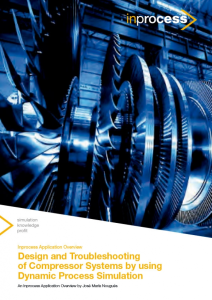
The use of dynamic process simulation has been established in the last few years as a reliable and effective tool to analyse transient behaviour of process systems. The transient analysis of these operations is critical to evaluate the dynamic behaviour of the compressor system and the associated control and safety systems.
Discover how Inprocess’ wide experience in dynamic flare analysis can help you to avoid acquiring unnecessary new materials and equipment in flare systems revalidation projects, without ever compromising safety.
Deep train your workforce before plant start-up and reduce future operational issues using dynamic process simulation all along asset lifecycle.

Plan and follow-up operators’ professional development by digitizing and centralizing in a single training environment all new and old learning material.
Apply dynamic simulation to mitigate the impact of spurious upsets, which could affect the operability of your steam and electrical network.
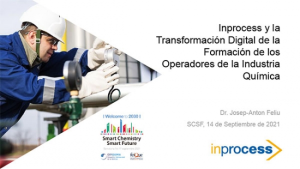
Presentación en el Agora de Smart Chemistry Smart Future, área de Expoquimia específicamente destinada a los avances tecnológicos para el sector químico. Inprocess lleva años ayudando a la Industria Química en la transformación digital de la formación de sus operadores.
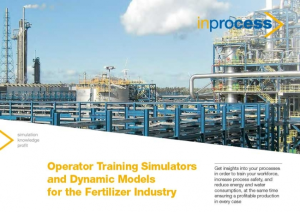
As in any other industry, safety, reliability and profitability rely to a great extent on a sufficient level of knowledge, skills and aptitudes of the plant’s workforce. In such an energy-intensive industry, such as fertilizers, having the personnel properly trained is key to achieving corporate targets and KPIs.

Inprocess Technology and Consulting Group, S.L.
Pedro i Pons, 9-11, 13th floor
08034 Barcelona, Spain
Tel: +34 933 308 205
© 2026 Inprocess Technology and Consulting Group, S.L. | All rights reserved
© 2026 Inprocess Technology and
Consulting Group, S.L.
All rights reserved