Ensuring Refinery Lifecycle Safety with 

This presentation shows how  dynamic modelling has played a crucial role in supporting the safe expansion of a North American oil and gas facility. These models, continuously updated and refined through four major plant upgrades, helped simulate emergency scenarios, assess flare system performance, and integrate both unit and network responses.

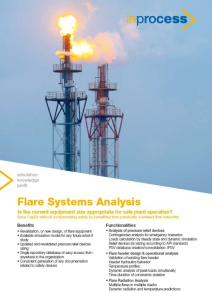
Flare System Assessment using Dynamic Process Simulations

In this session, we have explored how Inprocess applies Steady State and especially Dynamic process simulation techniques to analyze flare loads and flare network behavior. Learn how our expertise has helped clients identify hidden constraints, optimize system performance, and reduce CapEx spending —without compromising the plant safety.

Relief Flare Analysis using a Dynamic Simulation Model of your Plant

The common solution in industry when a flare system reaches its limits it to increase its capacity: CAPEX solution. As experts of the domain, Inprocess proposes Dynamic Simulation Model for higher accuracy of behavior prediction as well as for alternative solutions for flare capacity issues.

Relief Flare Analysis using a Dynamic Simulation of your Plant

Inprocess oral contribution to MECCE held in May 2023. This presentation conducted by Dr. Miquel Angel Alos explains the benefits of dynamic simulation as an alternative method for defining relief loads and enhancing the understanding of relief processes.

Revalidación de sistemas de alivio de presión y de descarga a antorcha en la industria petroquímica

Conozca de primera mano, cómo Inprocess implementa los proyectos de revalidación de sistemas de antorcha en plantas petroquímicas, siguiendo las recomendaciones de la API, con el soporte de herramientas de simulación, tanto en estado estacionario como dinámico.

Dynamic Flare Load Analysis

Discover how Inprocess’ wide experience in dynamic flare analysis can help you to avoid acquiring unnecessary new materials and equipment in flare systems revalidation projects, without ever compromising safety.

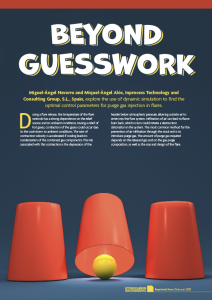
Beyond Guesswork

During a flare release, the temperature of the flare network has a strong dependence on the relief source and on ambient conditions. During a relief of hot gases, contraction of the gases could occur due to the cool-down to ambient conditions. The rate of contraction velocity is accelerated if cooling leads to condensation of the contained gas components.