ILIB: Inprocess Library of Training Modules

ILIB is the collection of Training Modules on Process Simulation and related subjects that have been developed and maintained by Inprocess experts over the last 25 years,

ILIB is the collection of Training Modules on Process Simulation and related subjects that have been developed and maintained by Inprocess experts over the last 25 years,
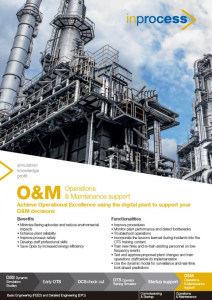
Achieve Operational Excellence using the digital plant to support your O&M decisions.
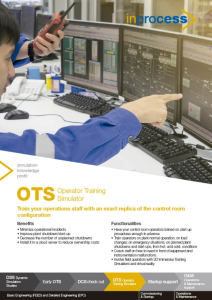
Train your operations staff with an exact replica of the control room configuration.
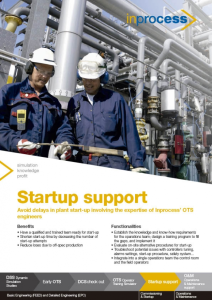
Avoid delays in plant start-ups using the expertise of Inprocess’ OTS engineers.
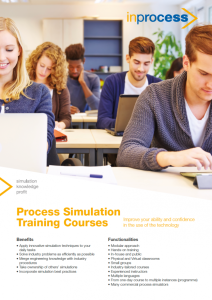
Improve your ability and confidence in the use of the technology: Apply innovative simulation techniques to your daily tasks. Solve industry problems as efficiently as possible. Merge engineering knowledge with industry procedures. Take ownership of others’ simulations. Incorporate simulation best practices.
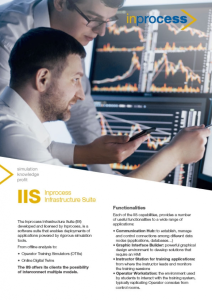
One of the key components of an Operator Training System is the station from where the instructor leads and monitors the training sessions. Inprocess has developed an instructor station software that allows users to
Cryogenic distillation is the best candidate for hydrogen isotopic separation in fusion power plants. The design of the ITER’s Isotope Separation System can still undergo major changes due to its close contact with the Water Detritiation System and this will be decisive in the design of future DEMO detritiation facilities.
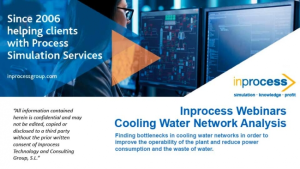
Finding bottlenecks in cooling water network to improve the operability of the plant and reduce the power consumption and waste of water.
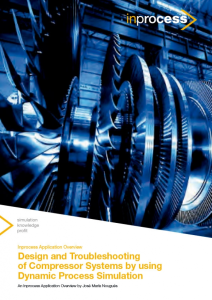
The use of dynamic process simulation has been established in the last few years as a reliable and effective tool to analyse transient behaviour of process systems. The transient analysis of these operations is critical to evaluate the dynamic behaviour of the compressor system and the associated control and safety systems.
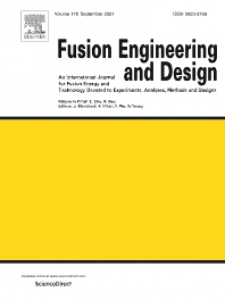
The realization of nuclear fusion energy is nowadays based on the concept of tritium breeding and the success of the ITER experiment. The latter relies today on a static monitoring approach to fulfill the emission limits imposed by the regulatory institutions.

Inprocess Technology and Consulting Group, S.L.U.
Pedro i Pons, 9-11, 13th floor
08034 Barcelona, Spain
Tel: +34 933 308 205
© 2026 Inprocess Technology and Consulting Group, S.L.U. | All rights reserved
© 2026 Inprocess Technology and
Consulting Group, S.L.
All rights reserved